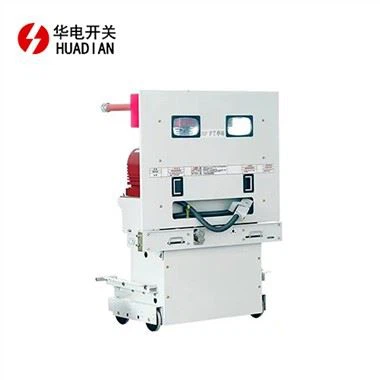
As a supplier of high voltage switchgear, I've had my fair share of questions about the components that make up these systems. One question that comes up quite often is about the role of the earthing switch in high voltage switchgear. So, let's dive right in and explore this important component.
What is an Earthing Switch?
First off, an earthing switch is a vital part of high voltage switchgear. It's basically a safety device that's used to connect an electrical circuit to the ground. In simple terms, it provides a path for electrical current to flow safely into the earth in case of a fault or when maintenance work is being done.
Safety During Maintenance
One of the main roles of the earthing switch is to ensure the safety of maintenance personnel. When workers need to perform maintenance on high voltage switchgear, they need to make sure that the equipment is completely de - energized. The earthing switch comes in handy here. By closing the earthing switch, any residual charge in the circuit can be safely discharged to the ground. This prevents the risk of electric shock to the maintenance crew.
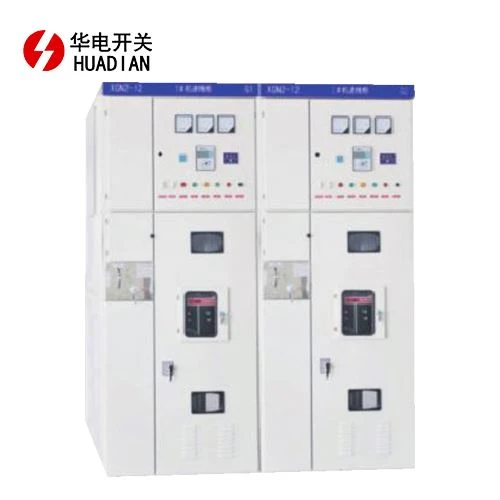
For example, let's say we have a XGN2 - 12 Box - type Fixed Metal - enclosed Switchgear. When technicians need to work on it, they first isolate the switchgear from the power source. Then, they close the earthing switch. This action grounds any remaining electrical energy, making it safe for the workers to open up the switchgear and carry out their maintenance tasks.
Fault Protection
Another crucial role of the earthing switch is in fault protection. In a high voltage system, faults can occur due to various reasons like lightning strikes, short - circuits, or equipment failures. When a fault happens, there can be a large amount of electrical current flowing through the system. The earthing switch helps to divert this excessive current to the ground.
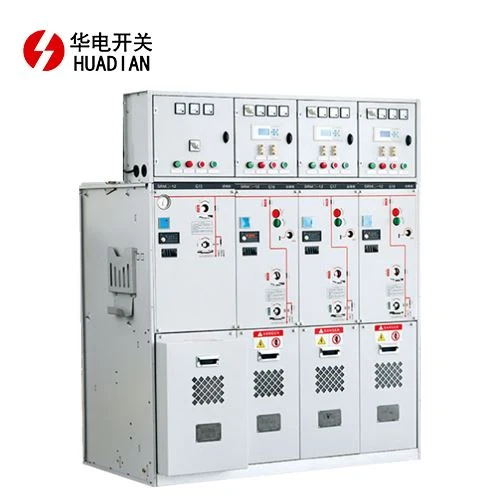
Take the SRM - 12 Gas - insulated Metal - enclosed Switchgear as an example. If there's a short - circuit in the system, the earthing switch can be quickly closed to provide a low - resistance path for the fault current. This helps to limit the damage to the switchgear and other components in the system. It also reduces the risk of fire or explosion that could be caused by the high - energy fault current.
System Isolation
The earthing switch also plays a role in system isolation. In a complex high voltage network, different parts of the system may need to be isolated for various reasons, such as for maintenance or during a fault. The earthing switch can be used to isolate a particular section of the switchgear from the rest of the system.
For instance, in a KYN61 - 40.5(Z) Armored Removable AC Metal Enclosed Switch Cabinet, if a specific circuit needs to be taken out of service, the earthing switch can be used to isolate it. This ensures that no electrical current can flow into the isolated section, providing a safe environment for work to be carried out.
How Does It Work?
The earthing switch works by creating a connection between the electrical circuit and the earth. It usually consists of a set of contacts that can be opened or closed. When the contacts are closed, the electrical current can flow from the circuit to the ground through a conductor.
The design of the earthing switch is such that it can handle high fault currents. It's made of materials that have low resistance to ensure that the current can flow easily to the ground. The switch is also designed to be reliable and durable, as it needs to operate correctly in various conditions.
Types of Earthing Switches
There are different types of earthing switches used in high voltage switchgear. One common type is the manual earthing switch. This type requires an operator to physically close or open the switch. Manual earthing switches are often used in smaller switchgear installations where the frequency of operation is relatively low.
Another type is the motor - operated earthing switch. These switches can be controlled remotely, which is very useful in large - scale high voltage systems. Motor - operated earthing switches can be integrated into the control system of the switchgear, allowing for automatic operation in case of a fault or during maintenance.
Importance in Different Industries
The role of the earthing switch is crucial in many industries that rely on high voltage switchgear. In the power generation industry, for example, high voltage switchgear is used to control and distribute electrical power. The earthing switch helps to ensure the safety of the power generation equipment and the personnel working on it.
In the industrial sector, high voltage switchgear is used to power large machinery and equipment. The earthing switch provides protection against electrical faults, preventing damage to the equipment and ensuring the safety of the workers.
Maintenance and Testing
Just like any other component in high voltage switchgear, the earthing switch needs to be properly maintained and tested. Regular maintenance helps to ensure that the switch is in good working condition and can operate correctly when needed.
Testing of the earthing switch involves checking its electrical and mechanical properties. Electrical tests are carried out to measure the resistance of the switch and to ensure that it can handle the expected fault currents. Mechanical tests are done to check the operation of the contacts and the overall mechanical integrity of the switch.
Conclusion
In conclusion, the earthing switch is an essential component of high voltage switchgear. It plays a crucial role in ensuring the safety of maintenance personnel, protecting the system from faults, and isolating different parts of the system. Whether it's a XGN2 - 12 Box - type Fixed Metal - enclosed Switchgear, SRM - 12 Gas - insulated Metal - enclosed Switchgear, or KYN61 - 40.5(Z) Armored Removable AC Metal Enclosed Switch Cabinet, the earthing switch is a key part of the overall safety and functionality of the switchgear.
If you're in the market for high voltage switchgear or have any questions about the role of the earthing switch, feel free to reach out to us. We're here to help you make the right choices for your electrical system.
References
- Electrical Power Systems: Design and Analysis, by Turan Gonen
- High Voltage Engineering: Theory and Practice, by M. S. Naidu and V. Kamaraju