

When it comes to electrical power systems, circuit breakers play a pivotal role in ensuring safety and reliability. Among the various types of circuit breakers available in the market, Sulfur Hexafluoride (SF6) circuit breakers have gained significant popularity due to their excellent insulating and arc - quenching properties. One important aspect that often concerns users, especially those in regions with cold climates, is the low - temperature performance of these circuit breakers and how it compares with other types. As a supplier of Sulfur Hexafluoride Circuit Breakers, I am here to delve deep into this topic.
Low - Temperature Performance of Sulfur Hexafluoride Circuit Breakers
Sulfur Hexafluoride is a synthetic, colorless, odorless, non - flammable, and non - toxic gas under normal conditions. It has outstanding dielectric strength and arc - quenching capabilities, which make it an ideal medium for circuit breakers. However, its performance at low temperatures is a critical factor that needs to be considered.
At low temperatures, the physical properties of SF6 gas change. The gas density decreases, and its dielectric strength may also be affected. This can potentially lead to issues such as reduced arc - quenching ability and increased risk of electrical breakdown. But modern SF6 circuit breakers are designed to mitigate these problems.
Manufacturers use advanced materials and design techniques to ensure that SF6 circuit breakers can operate reliably in low - temperature environments. For example, special insulation materials are used to maintain the dielectric performance of the breaker. Additionally, heaters can be installed in the breaker to keep the SF6 gas at an appropriate temperature, ensuring its proper functioning.
Our company offers a range of SF6 circuit breakers, including the SF6 - 40.5 Indoor Sulfur Hexafluoride Circuit Breaker. This indoor breaker is designed with features that enhance its low - temperature performance. The internal components are carefully selected and assembled to withstand cold temperatures, and the insulation system is optimized to maintain high dielectric strength even in harsh conditions.
Comparison with Other Types of Circuit Breakers
Oil Circuit Breakers
Oil circuit breakers were once widely used in power systems. They use oil as the arc - quenching and insulating medium. However, their low - temperature performance is relatively poor compared to SF6 circuit breakers.
At low temperatures, the viscosity of the oil increases significantly. This can slow down the movement of the breaker contacts and reduce the arc - quenching speed. Moreover, the insulating properties of the oil may also degrade at low temperatures, increasing the risk of electrical breakdown. In contrast, SF6 circuit breakers do not face such viscosity - related issues, and their arc - quenching performance is more stable at low temperatures.

Vacuum Circuit Breakers
Vacuum circuit breakers use a vacuum as the arc - quenching medium. They are known for their long service life and high reliability. In terms of low - temperature performance, vacuum circuit breakers generally perform well. Since there is no gas or liquid medium that can be affected by temperature changes, the operation of vacuum circuit breakers is relatively independent of temperature.
However, SF6 circuit breakers have an advantage in high - voltage applications. Vacuum circuit breakers are typically more suitable for medium - voltage systems, while SF6 circuit breakers can handle high - voltage and high - current applications more effectively. In high - voltage power grids where low - temperature operation is required, SF6 circuit breakers may be a better choice.
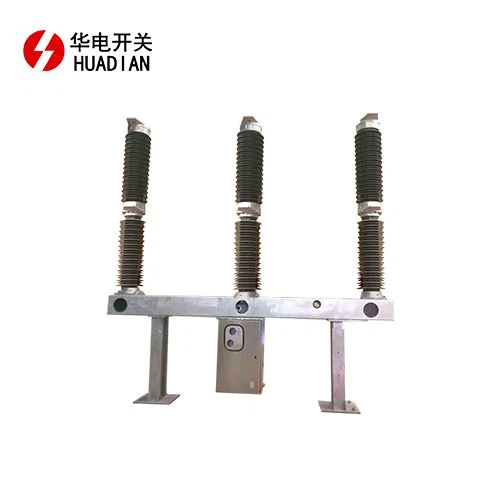
Our LW34 - 40.5 Outdoor Sulfur Hexafluoride Circuit Breaker and LW25 - 126 Outdoor Sulfur Hexafluoride Circuit Breaker are designed for outdoor high - voltage applications. They are equipped with features to ensure reliable operation in low - temperature environments, such as temperature - compensated pressure gauges and efficient heating systems.
Factors Affecting the Low - Temperature Performance of SF6 Circuit Breakers
Gas Pressure
The pressure of the SF6 gas in the circuit breaker is a crucial factor. At low temperatures, the gas pressure decreases. If the pressure drops below a certain level, the dielectric strength of the gas will be significantly reduced, increasing the risk of electrical breakdown. Therefore, maintaining the appropriate gas pressure is essential for the low - temperature performance of SF6 circuit breakers. Our circuit breakers are equipped with pressure monitoring systems to ensure that the gas pressure is always within the safe operating range.
Insulation Materials
The insulation materials used in the circuit breaker also play an important role in its low - temperature performance. High - quality insulation materials can maintain their dielectric properties at low temperatures, preventing electrical leakage and breakdown. We use advanced insulation materials in our SF6 circuit breakers, which have been tested and proven to perform well in cold environments.
Operating Mechanisms
The operating mechanisms of the circuit breaker, such as the contact movement and the opening and closing speed, can be affected by low temperatures. Cold temperatures can increase the friction in the mechanical parts, slowing down the operation of the breaker. To address this issue, we use lubricants that are specifically designed for low - temperature applications and optimize the mechanical design of the operating mechanisms to ensure smooth operation even in cold weather.
Applications in Cold Regions
In regions with extremely cold climates, such as the Arctic and some high - altitude areas, the low - temperature performance of circuit breakers is of utmost importance. SF6 circuit breakers are widely used in these areas due to their relatively good low - temperature performance.
For example, in power transmission and distribution systems in the Arctic, our SF6 circuit breakers have been installed to ensure the reliable operation of the grid. The advanced design and features of our circuit breakers allow them to withstand the harsh cold conditions, providing continuous power supply to the local communities.
Conclusion
In conclusion, the low - temperature performance of Sulfur Hexafluoride Circuit Breakers is a complex but well - understood aspect. While SF6 circuit breakers face some challenges at low temperatures, modern design and manufacturing techniques have enabled them to perform reliably in cold environments. When compared with other types of circuit breakers, SF6 circuit breakers have their unique advantages, especially in high - voltage applications.
If you are looking for high - quality Sulfur Hexafluoride Circuit Breakers with excellent low - temperature performance, we are here to provide you with the best solutions. Whether you need indoor or outdoor circuit breakers, our products are designed to meet your specific requirements. Contact us for more information and to start a procurement discussion. We are committed to providing you with the most reliable and efficient circuit breakers for your electrical power systems.
References
- "High - Voltage Circuit Breakers: Theory and Practice" by M. S. Sachdev
- "Electrical Insulation for Rotating Machines: Design, Evaluation, Aging, Testing, and Repair" by G. C. Stone, E. A. Boulter, I. Culbert, and L. A. di Barba
- Technical reports on Sulfur Hexafluoride Circuit Breakers from industry research institutions.


