

A 35kV vacuum circuit breaker is a crucial component in electrical power systems, designed to interrupt the flow of electrical current in the event of a fault or during normal switching operations. As a leading supplier of 35kV vacuum circuit breakers, I am well - versed in the main components that make up these essential devices. In this blog, I will explore the key parts of a 35kV vacuum circuit breaker and their functions.

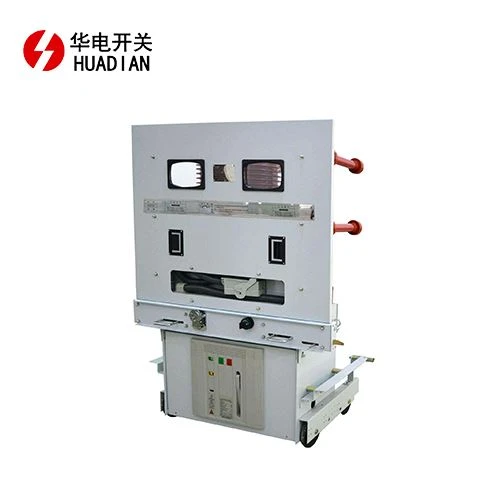
1. Vacuum Interrupter
The vacuum interrupter is the core component of a 35kV vacuum circuit breaker. It is a sealed container filled with a high - vacuum environment. The main function of the vacuum interrupter is to interrupt the electrical current when a fault occurs or during normal operation.
Inside the vacuum interrupter, there are two contacts: the fixed contact and the moving contact. When the circuit breaker is in the closed position, the moving contact is in contact with the fixed contact, allowing the flow of electrical current. When the circuit breaker needs to open, the moving contact is pulled away from the fixed contact. In a vacuum environment, there are very few gas molecules, so the arc that is generated when the contacts separate can be quickly extinguished. This is because the high - vacuum environment prevents the ionization of gas molecules, which is necessary for the maintenance of an arc.
The performance of the vacuum interrupter is critical to the overall performance of the circuit breaker. Factors such as the material of the contacts, the vacuum level, and the design of the interrupter can all affect its ability to interrupt current. For example, some high - performance vacuum interrupters use special contact materials that can withstand high - temperature and high - current conditions, which helps to improve the reliability and durability of the circuit breaker.
2. Operating Mechanism
The operating mechanism is responsible for opening and closing the contacts of the vacuum interrupter. There are several types of operating mechanisms commonly used in 35kV vacuum circuit breakers, including spring - operated mechanisms, electromagnetic - operated mechanisms, and hydraulic - operated mechanisms.
Spring - operated mechanisms are widely used due to their simplicity, reliability, and relatively low cost. In a spring - operated mechanism, a spring is charged either manually or by an electric motor. When the circuit breaker needs to open or close, the stored energy in the spring is released, which drives the moving contact of the vacuum interrupter to move.
Electromagnetic - operated mechanisms use an electromagnetic field to drive the movement of the contacts. They are known for their fast operation speed and high reliability. However, they usually require a relatively high - power input.
Hydraulic - operated mechanisms use hydraulic pressure to drive the movement of the contacts. They can provide a large driving force and are suitable for high - voltage and high - current applications. But they are more complex and require more maintenance compared to spring - operated mechanisms.
The choice of the operating mechanism depends on various factors such as the application requirements, cost, and reliability needs. For example, in a substation where fast operation speed is crucial, an electromagnetic - operated mechanism may be preferred.
3. Insulation System
The insulation system of a 35kV vacuum circuit breaker is essential to prevent electrical breakdown and ensure safe operation. It includes both internal and external insulation.
Internal insulation mainly refers to the insulation between the conductive parts inside the circuit breaker, such as the insulation between the contacts of the vacuum interrupter and the insulation between the conductive bars. High - quality insulating materials are used to ensure good insulation performance. For example, epoxy resin is often used for internal insulation due to its excellent electrical and mechanical properties.
External insulation is used to insulate the circuit breaker from the surrounding environment. It usually consists of porcelain or composite insulators. Porcelain insulators are traditional and have a long - proven track record in high - voltage applications. They have good mechanical strength and electrical insulation properties. Composite insulators, on the other hand, are lighter and more resistant to pollution and vandalism. They are becoming increasingly popular in modern power systems.
4. Current Transformers
Current transformers (CTs) are an important part of a 35kV vacuum circuit breaker. Their main function is to measure the electrical current flowing through the circuit breaker. CTs step down the high - current in the main circuit to a low - current that can be easily measured by instruments such as ammeters and protective relays.
The output of the current transformers is used for various purposes. For example, it can be used for metering the electrical energy consumed in the circuit. It is also used by protective relays to detect faults in the circuit. When the current measured by the CTs exceeds a certain threshold, the protective relay will send a signal to the operating mechanism of the circuit breaker to open the contacts and interrupt the current flow.
5. Control and Protection System
The control and protection system of a 35kV vacuum circuit breaker is responsible for controlling the operation of the circuit breaker and protecting the electrical system from faults. It includes control panels, protective relays, and associated wiring.
The control panel is used to send commands to the operating mechanism of the circuit breaker, such as opening or closing the contacts. It can be controlled manually or remotely. For example, in a modern substation, the circuit breakers can be controlled from a central control room through a communication network.
Protective relays are the key components of the protection system. They continuously monitor the electrical parameters such as current, voltage, and frequency in the circuit. When a fault is detected, such as a short - circuit or an overload, the protective relay will send a trip signal to the operating mechanism of the circuit breaker to quickly isolate the faulty part of the electrical system.
Our Product Offerings
As a 35kV vacuum circuit breaker supplier, we offer a wide range of high - quality products. Our VEGM - 40.5 Vacuum Circuit Breaker is designed with advanced technology and high - performance components. It features a reliable vacuum interrupter, a spring - operated mechanism for fast and stable operation, and a high - quality insulation system to ensure long - term reliability.
Another popular product is our ZN39 - 40.5 Vacuum Circuit Breaker. It is known for its excellent interrupting capacity and low maintenance requirements. The circuit breaker is equipped with advanced current transformers and a sophisticated control and protection system to provide accurate measurement and reliable protection.
We also offer the 33kV Vacuum Circuit Breaker which is suitable for a variety of applications in the power grid. It combines high - performance components with a user - friendly design, making it a cost - effective solution for many customers.
Conclusion
In conclusion, a 35kV vacuum circuit breaker is a complex device composed of several key components, each with its own important function. The vacuum interrupter is the heart of the circuit breaker, responsible for interrupting the current. The operating mechanism drives the movement of the contacts, the insulation system ensures electrical safety, the current transformers measure the current, and the control and protection system manages the operation and protects the electrical system.
If you are in need of a high - quality 35kV vacuum circuit breaker for your electrical project, we are here to provide you with the best solutions. We have a team of experienced engineers and technicians who can offer professional advice and support. Contact us for more information and to start discussing your procurement needs.
References
- Electric Power Systems: Analysis and Control by Claudio A. Cañizares
- High Voltage Engineering: Theory and Practice by M. S. Naidu and V. Kamaraju


