

High-voltage switchgear is currently widely used and exists in large quantities. Due to various problems in design, manufacturing, installation, operation, and maintenance, the accident rate is relatively high. Among the many types of switchgear accidents, insulation accidents mostly occur at voltage levels of 10kV and above, and the consequences are more severe. Especially for handcart-type switchgear, the insulation accident rate is even higher, and the phenomenon of one failure affecting adjacent switchgear is even more pronounced.
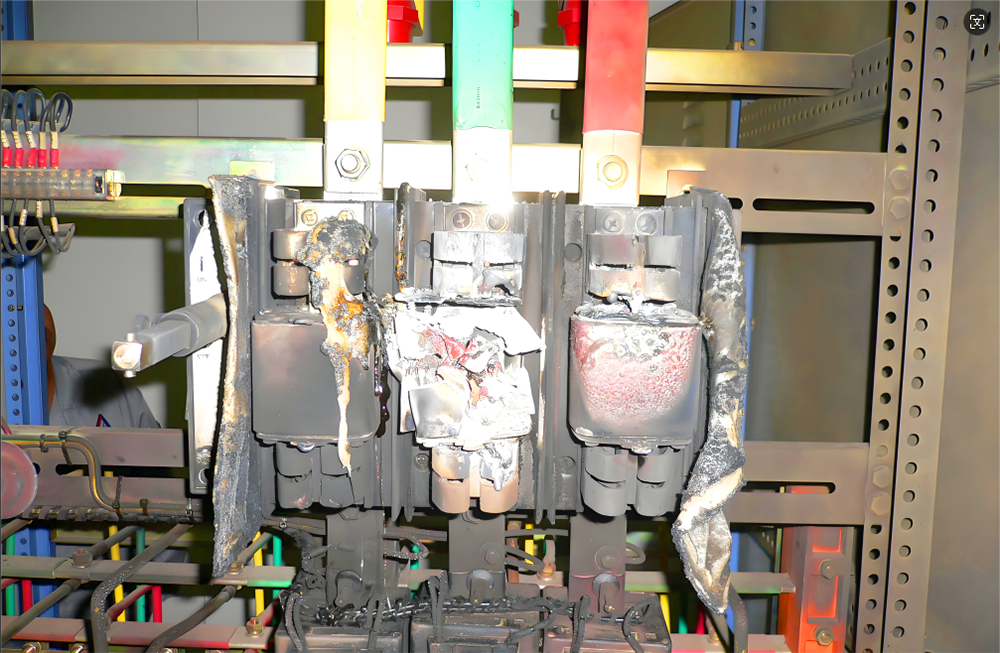
There are several reasons specifically:
1. Insufficient creepage distance and air clearance
Insufficient creepage distance and air clearance are the root cause of insulation damage accidents in switchgear. This is especially true for truck-mounted switchgear, where, in order to shorten the cabinet size, the distance between circuit breakers and the isolation plugs to ground is drastically reduced, without taking effective measures to ensure insulation strength.
2. Poor Manufacturing Quality and Workmanship
Manufacturing and assembly quality significantly impact the overall withstand voltage level of the switchgear. While some components within the switchgear may pass the withstand voltage test, the switchgear as a whole may fail due to poor assembly quality. For example, irregularly shaped fastening screws, with excessive extension of the screw beyond the nut after tightening; some support porcelain columns have T-shaped base plates, requiring special treatment at the support columns, which not only shortens the insulation distance but also creates localized electric field variations. Inadequate "five-proof" measures within the switchgear, malfunctioning mechanical interlocks, and unclear closing and opening positions frequently lead to accidental closing or opening. Furthermore, poor-quality support porcelain columns exhibit poor dynamic stability, potentially breaking under short-circuit current impacts and exacerbating accidents.
3. Insufficient current carrying capacity or poor contact
When the capacity is insufficient or the contact is poor, the local temperature rises. In severe cases, the current-carrying part at that point is burned out, causing arcing to ground or between phases, resulting in insulation flashover.
4. Impact of Environmental Conditions
The environmental conditions during switchgear operation are the main cause of insulation flashover in switchgear. Increasing air pollution gradually contaminates the insulators, bushings, and busbars of power equipment. Analysis of flashover accidents over the years reveals the following two main causes:
First (objectively existing): Both dirt and moisture exist simultaneously on the surface of the insulators. Dust adheres to the surface of the insulators, and even in a dry state, the insulation resistance remains high, so flashover does not occur in dry climates. Clean water also has high resistance; if the insulator is not dirty, although it may be damp, its insulation strength remains high, and flashover will not occur. Generally, prolonged dry weather leads to increased dirt accumulation on insulators and busbars. If this is followed by sudden fog that lasts for a long time (usually 2-3 hours), the dirt is thoroughly moistened by the wastewater, increasing the likelihood of flashover.
Second (human-caused): The leakage distance of the insulator strings is very small and cannot adapt to dirty and humid environments. Flashover only occurs when the insulation resistance decreases and the leakage current increases to a certain level. Under the same conditions of contamination, moisture, and voltage, a longer leakage distance in the insulator leads to a faster increase in leakage current. A longer leakage distance also results in a longer arc diameter, making flashover less likely. Conversely, a shorter leakage distance in the insulator makes it easier for discharge to bridging the electrodes, thus increasing the risk of flashover.
5. Lightning Overvoltage Causing Switchgear Flashover
In power systems, accidents caused by lightning discharge leading to overvoltage and switchgear flashover are frequent. Lightning overvoltages can generally be divided into two types based on their causes:
① Direct Lightning Strike Overvoltage: Overvoltage generated when lightning directly strikes power equipment such as transmission lines. For example, a thundercloud with a ground voltage of several hundred megavolts discharges its charge directly onto the conductors of a transmission line. This abnormally high voltage propagates along the conductor in the form of a traveling wave from the point of impact, resulting in overvoltage wherever it reaches. Furthermore, when lightning strikes a tower or falls on a lightning rod, a large amount of charge flows into the ground through the lightning rod, tower, and grounding resistance. The huge current generates a large voltage drop along the way, causing the potential of the lightning rod and tower to rise, creating a high potential difference with the transmission line. When this potential difference is sufficient to cause insulation breakdown, an overvoltage is generated on the transmission line, which then propagates in the form of a traveling wave.
② Induced Overvoltage Induced overvoltage refers to the overvoltage induced on power transmission lines when lightning strikes objects near electrical equipment or when thunderclouds discharge over transmission lines. Due to lightning strikes near the conductors, a large amount of lightning current flows into the ground along the channel, generating a rapidly changing electromagnetic field. This electromagnetic field can also induce overvoltage in the conductors.
Characteristics of lightning overvoltage:
◆Short duration, generally tens of microseconds.
◆Unipolarity; direct lightning strikes are mostly negative polarity, while induced voltages are mostly positive polarity.
◆High peak value of lightning overvoltage, reaching thousands of kilovolts. It can potentially cause flashover of the conductor to ground or the insulation between adjacent phases, and the traveling wave entering the substation can cause the switch insulation to break down, resulting in a discharge phenomenon.
Contact Us
Having undergone rigorous market testing, Shaanxi Huadian has become the preferred choice for numerous power projects due to its superior mechanical precision and stability. Its core components utilize special processes and materials, making them fatigue-resistant, wear-resistant, and with a mechanical lifespan exceeding 10,000 cycles. From raw materials to finished products, the entire process is meticulously manufactured, providing full lifecycle services from selection guidance, installation and commissioning to technical training.If you want to learn more,please contact us at:pannie@hdswitchgear.com.


