


Load Break Switch
Your Leading Shaanxi huadian electric co., Ltd. Supplier
Shaanxi huadian electric co., Ltd. It is located in Baoji high-tech development zone, Shaanxi province. A modern high-tech enterprise specializing in integrating research and development, manufacturing, and sales of vacuum circuit breakers.
Shaanxi huadian has nearly 10,000 square meters of circuit breaker production workshop, and has a fully automated control assembly line and a full set of imported circuit breaker testing equipment, with an annual production capacity of 10,000 units.
Why Choose Us?
High Quality
Our products every tiny part is made of the most suitable material,every single product comes out with strict inspection.
Advanced Equipment
Our has a fully automated control assembly line and a full set of imported circuit breaker testing equipment.
Good Service
We have complete pre-sales and after-sales service, professional team, 24 hours to serve you.
Technical Support
We has a professional research, and development team and a new product laboratory.


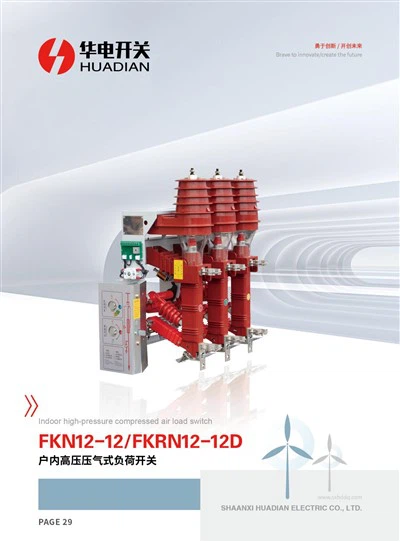
What is Load Break Switch?
A load break switch is a disconnect switch that has been designed to provide making or breaking of specified currents.
This is accomplished by addition of equipment that increases the operating speed of the disconnect switch blade and the addition of some type of equipment to alter the arcing phenomena and allow the safe interruption of the arc resulting when switching load currents.
A load break switch is a switch that has been designed to provide making or breaking of specified currents.
This is accomplished by addition of equipment that increases the operating speed of the disconnect switch blade and the addition of some type of equipment to alter the arcing phenomena and allow the safe interruption of the arc resulting when switching load currents.
Disconnect switches can be supplied with equipment to provide a limited load switching capability. Arcing horns, whips, and spring actuators are typical at lower voltages.
Safety: The primary advantage of a load break switch is the safety it provides. By allowing circuits to be opened and closed under load, it significantly reduces the risk of electric arcs, which can be dangerous to equipment and personnel.
Maintenance Efficiency: In industrial and electrical settings, maintenance and upgrades are a constant. Load break switches facilitate these processes by allowing sections of the circuit to be isolated without shutting down the entire system.
Operational Flexibility: Load break switches provide operational flexibility in power distribution networks. They enable sections of the network to be isolated for repairs or upgrades without disrupting the entire system.
System Reliability: By enabling effective control and management of electrical circuits, load break switches contribute to the overall reliability of the power system. They help in minimizing downtime and ensuring continuous power supply.
Types of Load Break Switch


LBS Type Load Break Switch
LBS type air load disconnect switches are available in 3.6kV or 7.2kV up to 600 ampere 3-pole and 3.6kV or 7.2k 200 and 400 ampere 3-pole, including power fuse. This LBS air load disconnect switch unit comes with a power fuse, which is also a firing pin, a feature not normally found in LBS.
The firing pin in this switch is a tripping mechanism that works when the fuse blows. Once the fuse is blown, the firing pin opens all 3 poles at the same time. If these types of switches do not include this firing pin feature, then some phases may remain active once the fuse blows, which can lead to dangerous situations. When these switches come with a built-in automatic trip mechanism, the R293B and R290B remote linkage mechanisms are not appropriate.
LB Type Load Break Switches
This type of air LBS has reduced dimensions and can therefore be connected to compact compartments. In type LB type LBS, higher operational safety and improved interrupting performance can be achieved by rotating the arc contacts and redesigning the interrupting compartment. The different accessories are assembled in a modular system, so that the linkage mechanism, the power fuse frame and the auxiliary switch can simply be included in the switch body when required.
In addition, the split-excitation decoupling mechanism can be integrated into the basic frame. The R293B or R290B remote coupling mechanisms cannot be included in these diverter release mechanisms. The LB air load breakout switch type 200AF 400AF can be connected to a power fuse. However, if this type of LBS has a 400AF rating, then only a power fuse of up to 200 amps is required.
RF Type Load Disconnect Switch
RF type load break switch can provide 12V or 24V or 36kV equal to 1200Amps 3-pole. This type of LBS includes an auxiliary blade, an interrupter chamber and a main blade. The auxiliary blade is set at the interrupter and attached to the main blade, so it will make contact at the same time as the main blade.
Once the main blade opens, the auxiliary blade will temporarily remain in contact within the interrupter chamber. Once this main blade reaches its travel limit, the auxiliary blade will quickly return to its position against the main blade under the influence of the energy stored in the spring. Thus, even when operated manually, this quick-break device works efficiently, and as the contacts move at high speed, the arc is rapidly extended and cooled in the interrupter chamber.
As the contacts move at high speed, the arc is rapidly extended and cooled by gas inside the interrupter.
SF6 Negative Load Breakers
SF6 gas-insulated LBS are mainly used for overhead lines with operating voltages up to 24 kV. These types of switches meet the requirements for maintenance-free and oil-free operation by means of SF6 gas, with the relevant components and equipment connected in their stainless steel and sealed tanks.
These low-brake switches can be operated manually or electrically for fault isolation, automation and remote control to suit power line requirements. reliability and ease of installation.
Application of Load Break Switch
Distribution Networks: Load break switches are commonly used in distribution networks to isolate sections of the grid for maintenance, repairs, or troubleshooting. They allow for the safe disconnection of power to specific areas without affecting the entire network.
Substations: Load break switches play a vital role in substations by providing isolation and sectionalization capabilities. They enable operators to isolate faulty equipment or sections of the substation while maintaining power flow to the rest of the system.
Overhead Lines: Load break switches are often installed on overhead power lines to provide sectionalizing points and enable the isolation of specific line segments. They facilitate efficient fault location and restoration of power by isolating the affected section without disrupting service to other areas.
Transformer Installations: Load break switches are used in transformer installations to isolate transformers from the rest of the electrical system for maintenance or replacement purposes. They ensure safe and controlled disconnection of transformers from the power supply.
Industrial Facilities: Load break switches are employed in industrial facilities to provide isolation and control of electrical circuits feeding various equipment and machinery. They enable maintenance personnel to work safely on electrical systems without risking electrical hazards.
Commercial Buildings: Load break switches are utilized in commercial buildings to isolate electrical circuits serving different areas or floors. They allow for localized maintenance or repairs without interrupting power supply to the entire building.
Emergency Power Systems: Load break switches are integrated into emergency power systems to provide manual or automatic transfer of power between utility and backup sources. They ensure seamless transition between power sources during emergencies or power outages.
Railway Electrification: Load break switches are used in railway electrification systems to isolate sections of the overhead catenary or third rail for maintenance or repair activities. They help maintain the reliability and safety of railway electrification infrastructure.
Renewable Energy Systems: Load break switches are integrated into renewable energy systems, such as solar and wind farms, to isolate power generation sources from the grid during maintenance or grid disturbances. They ensure safe operation and grid stability.
LBS include the closing position, isolated position, earthling position, upper insulating cover, upper stationary contact, spindle, M ring, lower insulating cover, sensor, lower stationary contact, air chute, movable contact, ground coupler, and ground contact.
Closing Position
In the SF6 LBS, the closing refers to the contacts staying surrounded through SF6 gas at 2•8 kg/cm2 pressure. When this switch operates, the moving contact will be pulled separately & an arc is struck in between the contacts.
Movable Contact
Movable contact in this switch is used to switch the current by moving their contacts mechanically with an appropriate speed to open or close the current.
Upper And Lower Stationary Contacts
Stationary contacts in the switch are points where an LBS throw will make or break a circuit. These contacts are always available in pairs. The contact that is fixed with the actuator of the switch is known as stationary contact.
Upper and lower insulating cover
Insulation cover is an insulative material that covers around the LBS to make the switch safer.
Arc chute
Arc chute includes a set of metal plates that are arranged in parallel and mutually insulated from each other. These plates can cool, split and securely reduce an electric arc. These are also known as arc dividers & arc splitters.
Spindle
A spindle is a rotating shaft including a fixture used for holding a tool or a workpiece. This spindle shaft severs as a positioner, support & rotary drive for the tool or workpiece.
How To Maintain Load Break Switch

Inspection Procedures
Visual inspections
Check for any cracked, damaged or overheated components.
Ensure enclosure seals are intact with no moisture ingress.
Confirm switches are adequately lubricated if applicable.
Verify area is clear of dust and debris which could impede operation.
Contact inspection
Examine switch contacts for any signs of pitting, burning or abnormal wear using a mirror.
Check contact alignment for any warping or gaps which could raise resistance.
Thermal scans
Use an infrared camera to identify any hot spots in the switch or terminations denoting loose connections.
Switch operation tests
Toggle the switch multiple times to confirm smooth engagement and disengagement of contacts.
Listen and feel for any abnormal sounds, clicks or hesitation in switch mechanisms.
Regular inspections ensure optimal performance and safety.
Preventative Maintenance
Proactive switch maintenance activities:
Lubrication
Re-lubricate moving current-carrying parts and hinge points per manufacturer guidance to prevent wear.
Fastener torque
Re-torque terminals and other tightened hardware to specification to avoid temperature-induced loosening.
Contact replacement
Proactively replace worn contacts before they degrade and pose resistance or arcing risks.
Protective coating
Reapply conformal coatings to help protect components from corrosion or moisture ingress.
Field testing
Perform dielectric tests to verify adequate insulation resistance to ground.
Well-maintained switches help avoid malfunctions and electrical hazards during switching cycles.

The operational essence of load break switches lies in mechanically manipulating their contacts to establish or interrupt current flow at an appropriate pace. During this process, these switches endure various stresses, including thermal, dielectric, and mechanical forces. Their function extends to safeguarding transformers, presenting an alternative to the conventional two-pole structure.
Differences Between Load Break Switches and Circuit Breakers
Load break switches and circuit breakers serve different purposes within electrical systems, despite some similarities in appearance and function. Here are the key differences between the two:
Load break switches: Load break switches are primarily designed to make or break electrical circuits under normal load conditions. They are used for isolating or disconnecting electrical equipment from the power supply for maintenance, repairs, or safety reasons. Load break switches typically do not provide overcurrent protection.
Circuit breakers: Circuit breakers are designed to interrupt the flow of electrical current in a circuit when an overcurrent or short circuit occurs. They are protective devices that automatically trip and open the circuit to prevent damage to electrical equipment and reduce the risk of fire or electrical hazards.
Load break switches: Load break switches do not provide protection against overcurrents or short circuits. They are primarily used for isolation purposes.
Circuit breakers: Circuit breakers provide protection against overloads, short circuits, and ground faults by automatically tripping and opening the circuit when excessive current flows through them.
Load break switches: Load break switches usually operate manually or through a motorized mechanism. They require manual intervention to open or close the circuit.
Circuit breakers: Circuit breakers can operate manually, through a motorized mechanism, or automatically in response to overcurrent or short circuit conditions.
Load break switches: Load break switches are commonly used in distribution systems, substations, and industrial applications where isolation of electrical equipment is required.
Circuit breakers: Circuit breakers are widely used in residential, commercial, and industrial electrical systems to protect circuits and equipment from overcurrents and short circuits.
Load break switches: Load break switches typically do not have trip characteristics since they do not provide overcurrent protection.
Circuit breakers: Circuit breakers have specific trip characteristics based on the type of fault they are designed to protect against, such as thermal, magnetic, or electronic trip units.
Our Factory
Shaanxi huadian electric co., Ltd. It is located in Baoji high-tech development zone, Shaanxi province. A modern high-tech enterprise specializing in integrating research and development, manufacturing, and sales of vacuum circuit breakers.
