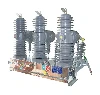
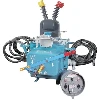
Maintenance of outdoor high-voltage disconnectors is a very important task, directly related to the safe and stable operation of the power grid. Maintenance work mainly includes daily inspections and regular maintenance.

1. Daily Inspection (without power outages)
Daily inspections are primarily conducted while the equipment is energized, using visual inspection, auditory inspection, and infrared temperature measurement. The goal is to promptly detect potential defects.
Appearance Inspection:
Insulators (porcelain bottles): Check for cleanliness and significant contamination; cracks, damage, or discharge marks (such as burnt glaze or black spots).
Metal Parts: Inspect the switch frame, operating mechanism box, and other components for rust and paint peeling.
Contacts and Terminals: Inspect the main conductive circuit (especially the contact area and lead connectors) for signs of overheating, reddening, or deformation. Infrared temperature measurement is the most effective method for detecting overheating.
Signages: Check the nameplate, opening and closing indicators, and phase markings for clarity and accuracy.
Status Check:
Open/Closed Position: Check whether the actual position is consistent with the indicator and the back-end monitoring system, and whether it is in place.
Contact Contact: For observable contacts, check for signs of burnout, deformation, or spring annealing.
Operating Mechanism Inspection:
Mechanism Box: Check that the door is tightly closed and properly sealed, and that it is fully waterproof, moisture-proof, and protected from small animals.
Components: Check connecting rods, crank arms, and other transmission components for deformation, cracks, rust, or looseness.
Abnormal Sounds:
Listen from a safe distance for any unusual discharge, vibration, or sticking sounds during operation or manipulation of the switch.
2. Regular Inspection and Maintenance (Power Outage)
Regular inspection and maintenance must be performed after a complete power outage, electrical testing, and the installation of ground wires and other safety measures have been completed. The interval is generally 1-3 years, or adjusted appropriately based on inspections, equipment condition, and operating environment.
Core Principle: Safety first. Strictly follow work permits and operating procedures.
Maintenance Steps and Content:
Power Outage and Safety Measures:
Confirm that the switch is completely disconnected and the power supply is reliably isolated.
Attach ground wires on both sides and take safety measures to prevent sudden power outages.
Cleaning:
Insulator Cleaning: Use a dry, soft cotton cloth or a special cleaning agent to thoroughly remove dust, oil, salt, and other contaminants from the insulator surface. Do not scrape with metal tools or hard objects to avoid damaging the glaze. For areas with severe contamination, consider using a live cleaning agent.
Mechanism Box Cleaning: Clean the interior of the mechanism box from dust, cobwebs, and other debris, keeping it dry and clean.
Tightening and Lubrication:
Tightening Connectors: Use a torque wrench to check and tighten all conductive clamps, connecting bolts, and grounding bolts to ensure good contact and prevent overheating. Important: Refer to the manufacturer's instructions for tightening torque; do not overtighten or undertighten.
Lubricating the Transmission Mechanism: Apply an appropriate amount of electrical compound grease (low-temperature grease) to transmission components, including shafts, bearings, and connecting rod pins. Caution: Do not use ordinary butter or motor oil, as these tend to attract dust, dry out over time, and corrode rubber seals.
Checking Contact Pressure: Check the contact springs for fatigue and deformation, and for normal pressure.
Mechanical Property Adjustment and Inspection:
Opening and Closing Operations: Perform several manual opening and closing operations to check for smooth, flexible movement and any signs of jamming.
Three-Phase Synchronicity: Check that the opening and closing of the three-phase switch are essentially synchronized.
Travel and Clearance: Check that mechanical parameters such as contact insertion depth, opening distance, and overtravel meet manufacturer specifications.
Lockout Device Inspection: Check that mechanical locks (such as interlocks with the grounding switch) and electrical locks are reliable and effective. This is crucial for preventing misoperation.
Defect Handling:
Replace Damaged Parts: Replace damaged or severely worn parts, such as rusted fasteners, cracked insulators, and severely corroded contacts, promptly.
Rust Removal and Anti-Corrosion: Remove rust from rusted metal structures and components and reapply anti-corrosion paint.
Sealing: Replace aging seals in the mechanism box to ensure proper sealing and waterproofing.
Post-Maintenance Testing:
After maintenance, before discontinuing all temporary safety measures, perform several manual and (if applicable) power-on and power-off operations to confirm that everything is functioning properly.
Measure the contact resistance of the main conductive circuit and compare it with historical data and standard values to determine contact integrity.
3. Special Precautions
Rust Prevention: Rust is a serious problem in outdoor environments, especially coastal and industrially polluted areas, and should be inspected and addressed.
Freeze Prevention: In cold regions, check for condensation or ice inside the mechanism housing and verify the low-temperature performance of the grease.
Loosening Prevention: Bolts can easily loosen due to exposure to wind, sunlight, and operational vibration, making proper tightening crucial.
Recordkeeping: Detailed records must be kept for every inspection and maintenance, establishing an equipment "health file" to facilitate tracking, analysis, and condition-based maintenance.
Conclusion
Maintenance of outdoor high-voltage disconnectors can be summarized as: "Frequent inspections, regular repairs, cleaning, tightening bolts, lubricating mechanisms, adjusting parameters, correcting defects, and maintaining strict records." Always adhering to the principle of "safety first, prevention first" and through standardized maintenance, you can effectively extend the life of the equipment and ensure safe and reliable operation of the power grid. For important or complex maintenance work, it is recommended that professional maintenance personnel perform it.