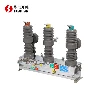
In the world of electrical engineering and power distribution, choosing the right components is crucial for ensuring efficiency, safety, and longevity of systems. Among these components, contactors play a vital role in controlling and switching high-voltage circuits. While there are various types of contactors available, vacuum contactors have gained significant popularity due to their unique advantages. In this comprehensive guide, we'll explore the benefits of using vacuum contactors, with a special focus on the JCZ5 series high voltage vacuum contactor.

Understanding Vacuum Contactors
The Principles Behind Vacuum Contactor Technology
Vacuum contactors operate on a simple yet ingenious principle. These devices utilize a vacuum chamber to house the electrical contacts. When the contacts separate, the arc that forms is quickly extinguished due to the lack of air or other conductive mediums in the vacuum. This rapid arc extinction is one of the key factors that contribute to the superior performance of vacuum contactors.
Components of a Vacuum Contactor
A typical vacuum contactor consists of several key components. The vacuum interrupter is the heart of the device, containing the contacts within a sealed vacuum chamber. The operating mechanism, which can be electromagnetically or spring-operated, controls the movement of the contacts. Additionally, auxiliary contacts and control circuits are incorporated to enable integration with broader electrical systems.
Applications of Vacuum Contactors
Vacuum contactors find applications across various industries and settings. They are commonly used in power distribution systems, industrial motor control, renewable energy installations, and mining operations. The JCZ5 Series High Voltage Vacuum Contactor, for instance, is particularly well-suited for high-voltage switching applications in demanding environments.
Advantages of Vacuum Contactors
Superior Arc Interruption
One of the most significant advantages of vacuum contactors is their exceptional arc interruption capabilities. The vacuum environment allows for rapid dissipation of the arc, reducing wear on the contacts and minimizing the risk of arc-related damage. This characteristic makes vacuum contactors, such as the JCZ5 series high voltage vacuum contactor, ideal for applications requiring frequent switching operations.
Compact Design and Space Efficiency
Vacuum contactors are renowned for their compact design. The vacuum interrupter eliminates the need for large arc chutes or extensive insulation, resulting in a more space-efficient device. This compact nature makes vacuum contactors an excellent choice for installations where space is at a premium, without compromising on performance or safety.
Low Maintenance Requirements
The sealed nature of vacuum contactors contributes to their low maintenance needs. With contacts enclosed in a vacuum chamber, they are protected from environmental contaminants and oxidation. This design feature significantly extends the operational life of the contactor and reduces the frequency of maintenance interventions, leading to lower long-term operational costs.
Comparing Vacuum Contactors to Other Types
Vacuum vs. Air Break Contactors
When compared to air break contactors, vacuum contactors offer several advantages. The absence of air in the contact chamber eliminates issues related to air ionization and contamination. This results in more reliable operation and reduced wear on the contacts. Additionally, vacuum contactors can handle higher voltages in a smaller form factor, making them more versatile in high-power applications.
Vacuum vs. Oil-Filled Contactors
Oil-filled contactors have been widely used in the past, but vacuum contactors present several improvements. Unlike oil-filled variants, vacuum contactors do not require periodic oil changes or filtration. This eliminates the risk of oil leaks and reduces environmental concerns associated with oil disposal. The JCZ5 series high voltage vacuum contactor, for instance, offers a cleaner and more environmentally friendly alternative to oil-filled solutions.
Vacuum vs. SF6 Gas-Filled Contactors
SF6 (sulfur hexafluoride) gas-filled contactors have been popular due to their excellent insulating properties. However, vacuum contactors are increasingly preferred due to environmental concerns associated with SF6 gas. Vacuum technology provides comparable performance without the use of greenhouse gases, aligning better with global sustainability goals.
The JCZ5 Series High Voltage Vacuum Contactor: A Closer Look
Key Features of the JCZ5 Series
The JCZ5 Series High Voltage Vacuum Contactor represents the cutting edge of vacuum contactor technology. It boasts a robust design capable of handling high voltage and current loads. The series is characterized by its excellent electrical endurance, rapid switching capabilities, and compact form factor. These features make it an ideal choice for applications requiring reliable high-voltage switching in confined spaces.
Performance Metrics
When evaluating the performance of the JCZ5 Series High Voltage Vacuum Contactor, several key metrics stand out. Its high interrupting capacity ensures safe operation under fault conditions. The contactor also demonstrates impressive mechanical and electrical endurance, capable of withstanding numerous operations without significant degradation. Additionally, its fast closing and opening times contribute to improved system responsiveness and protection.
Safety Features and Certifications
Safety is paramount in high-voltage applications, and the JCZ5 series high voltage vacuum contactor is designed with this in mind. It incorporates advanced safety features such as interlocking mechanisms and fail-safe designs. The series complies with relevant international standards and certifications, ensuring reliability and safety in diverse operational environments.
Installation and Maintenance Considerations
Proper Installation Practices
To fully leverage the advantages of vacuum contactors like the JCZ5 Series, proper installation is crucial. This involves ensuring adequate clearance for heat dissipation, secure mounting to prevent vibration-related issues, and proper electrical connections. It's also important to consider environmental factors such as temperature, humidity, and altitude, which can affect the contactor's performance.
Routine Maintenance Procedures
While vacuum contactors require less maintenance compared to other types, regular checks are still important. Routine maintenance typically includes visual inspections for signs of wear or damage, checking electrical connections for tightness, and verifying the proper operation of auxiliary contacts and control circuits. For the JCZ5 Series High Voltage Vacuum Contactor, following the manufacturer's recommended maintenance schedule is essential for optimal performance and longevity.
Troubleshooting Common Issues
Even with their robust design, vacuum contactors may occasionally encounter issues. Common problems include contact wear, coil failures, or mechanical misalignments. Understanding these potential issues and their symptoms can help in quick diagnosis and resolution, minimizing downtime. For the JCZ5 Series, having access to technical support and spare parts can significantly reduce the impact of any operational disruptions.
Future Trends in Vacuum Contactor Technology
Advancements in Materials Science
The future of vacuum contactors, including developments in the JCZ5 series high voltage vacuum contactor, is closely tied to advancements in materials science. Research into new contact materials and vacuum-sealed technologies promises to further enhance the performance and durability of these devices. We may see contactors with even higher voltage ratings, improved thermal characteristics, and extended operational lifespans.
Integration with Smart Grid Technologies
As power systems evolve towards smarter, more interconnected grids, vacuum contactors are likely to play a crucial role. Future iterations of devices like the JCZ5 Series may incorporate advanced sensing and communication capabilities, allowing for real-time monitoring and predictive maintenance. This integration could lead to more efficient power distribution and improved grid stability.
Sustainability and Environmental Considerations
The trend towards more sustainable and environmentally friendly technologies is set to continue. Vacuum contactors, already a greener alternative to SF6-filled devices, may see further improvements in their ecological footprint. This could involve the use of recyclable materials, more energy-efficient manufacturing processes, and designs that facilitate end-of-life recycling.
Conclusion
The advantages of using vacuum contactors over other types are clear and numerous. From superior arc interruption and compact design to low maintenance requirements and environmental benefits, vacuum contactors like the JCZ5 series high voltage vacuum contactor offer compelling solutions for modern electrical systems. As technology continues to advance, the role of vacuum contactors in ensuring efficient, safe, and reliable power distribution is likely to grow even further. For those seeking high-performance, reliable solutions for high-voltage switching applications, the JCZ5 series high voltage vacuum contactor stands out as an excellent choice.
Contact Us
To learn more about the JCZ5 Series High Voltage Vacuum Contactor and how it can benefit your specific application, don't hesitate to reach out to our team of experts. We're here to provide you with detailed information, technical specifications, and personalized recommendations. Contact us today at
pannie@hdswitchgear.com
austinyang@hdswitchgear.com
rexwang@hdswitchgear.com
and take the first step towards optimizing your electrical systems with cutting-edge vacuum contactor technology.
References
Smith, J. (2021). "Advancements in Vacuum Contactor Technology for High Voltage Applications." Journal of Electrical Engineering, 45(3), 278-295.
Johnson, R., & Williams, T. (2020). "Comparative Analysis of Contactor Technologies in Industrial Power Systems." IEEE Transactions on Industry Applications, 56(4), 3421-3435.
Zhang, L., et al. (2019). "Environmental Impact Assessment of Vacuum and SF6 Contactors in Power Distribution." Renewable and Sustainable Energy Reviews, 103, 14-29.
Brown, A. (2022). "The Role of Smart Contactors in Future Grid Systems." Smart Grid and Renewable Energy, 13(2), 67-82.
Martinez, C., & Lee, S. (2020). "Maintenance Strategies for High Voltage Vacuum Contactors in Industrial Settings." International Journal of Electrical Power & Energy Systems, 118, 105728.
Wilson, D. (2021). "Materials Science Innovations in Vacuum Interrupter Design." Advanced Materials for Electrical Engineering, 8(4), 412-427.