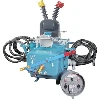
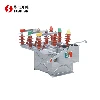
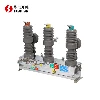
Switchgear can be classified based on the voltage levels they operate under, which directly impacts their applications and performance. Here, we'll explore three main categories: low-voltage switchgear, medium-voltage switchgear, and high-voltage switchgear.

Low-Voltage Switchgear
Low-voltage switchgear, operating at voltages up to 1,000 volts, is essential in environments like industrial facilities, commercial buildings, and residential areas where the power demands are relatively modest. This type of switchgear includes vital components such as circuit breakers, relays, and disconnect switches, all working together to safeguard electrical circuits. They provide critical protection against issues like overloads, short circuits, and ground faults, ensuring the reliability and safety of the electrical system. By effectively managing and distributing electricity, low-voltage switchgear plays a crucial role in maintaining operational stability and safety across various applications.
Medium-Voltage Switchgear
Medium-voltage switchgear, operating within a voltage range of 1,000 to 36,000 volts, is crucial for managing and protecting electrical systems in power distribution networks and large industrial facilities. This type of switchgear is commonly deployed in substations, where it plays a key role in controlling the flow of electricity and ensuring the safety and efficiency of power transmission. By protecting critical electrical equipment from faults and managing power distribution effectively, medium-voltage switchgear helps maintain the stability and reliability of electrical grids, making it indispensable in both utility and industrial applications.
High-Voltage Switchgear
High-voltage switchgear, which operates at voltages exceeding 36,000 volts, is integral to power transmission systems. It is used to manage the substantial flow of electricity from power generation plants to the broader distribution network. This type of switchgear is engineered to handle high electrical loads and to isolate faults effectively within the grid. By doing so, it plays a crucial role in maintaining the stability of power systems and preventing widespread outages. High-voltage switchgear ensures that electricity is transmitted efficiently and safely, supporting the reliable operation of large-scale power infrastructure.
How Does Switchgear Insulation Affect Its Performance?
Insulation is a key factor in switchgear performance, influencing its safety, durability, and efficiency. Switchgear insulation can be categorized into three types: air-insulated switchgear (AIS), gas-insulated switchgear (GIS), and hybrid-insulated switchgear. Each type offers distinct advantages and is suitable for different applications.
Air-Insulated Switchgear (AIS)
Air-insulated switchgear uses air as the insulating medium. It's a cost-effective solution commonly used in low and medium-voltage applications. AIS is easy to maintain and offers reliable performance, making it a popular choice for many industries. However, it requires more space compared to other insulation types.
Gas-Insulated Switchgear (GIS)
Gas-insulated switchgear uses sulfur hexafluoride (SF6) gas as the insulating medium. GIS is compact and efficient, making it ideal for high-voltage applications where space is limited, such as in urban substations. The gas insulation provides excellent protection against electrical faults, but GIS systems are generally more expensive and require careful handling due to the environmental impact of SF6.
Hybrid-Insulated Switchgear
Hybrid-insulated switchgear combines the benefits of both air and gas insulation. It offers a balance between cost, space efficiency, and performance. Hybrid switchgear is often used in medium to high-voltage applications where a compact design is needed without compromising on reliability or safety.
What Are the Key Functions of Different Switchgear Components?
Switchgear consists of various components that work together to ensure the safe and efficient distribution of electricity. Understanding the functions of these components is crucial for selecting the right switchgear for specific applications.
Circuit Breakers
Circuit breakers are the heart of any switchgear system. They automatically interrupt electrical flow in the event of an overload or short circuit, protecting both the electrical network and connected equipment. Circuit breakers are available in different types, including air circuit breakers (ACB), vacuum circuit breakers (VCB), and SF6 circuit breakers, each suited to different voltage levels and applications.
Relays
Relays are protective devices that monitor electrical parameters like current, voltage, and frequency. When they detect an abnormal condition, they trigger the circuit breakers to operate, preventing potential damage to the system. Relays are critical for ensuring the reliability and safety of electrical networks.
Disconnect Switches
Disconnect switches, also known as isolators, are used to safely isolate a section of the circuit for maintenance or emergency purposes. They ensure that electrical equipment can be safely de-energized and serviced without risk to personnel. Disconnect switches are typically used in conjunction with circuit breakers and relays to enhance system safety.
Busbars
Busbars are metallic strips or bars that conduct electricity within the switchgear. They connect various components and distribute power across different circuits. The design and material of busbars are crucial for ensuring efficient and reliable power distribution. They are commonly made of copper or aluminum due to their excellent conductivity.
Fuses
Fuses are safety devices that protect electrical circuits from excessive current. They contain a metal wire or strip that melts when the current exceeds a certain level, breaking the circuit and preventing damage. Fuses are often used as a backup protection method alongside circuit breakers.
Conclusion
Switchgear is a vital component of any electrical power system, providing protection, control, and reliability. By understanding the different types of switchgear based on voltage levels, insulation methods, and the functions of various components, you can make informed decisions when selecting the right equipment for your needs. Shaanxi Huadian Electric Co., Ltd. offers a wide range of high-quality switchgear solutions, backed by advanced manufacturing processes and rigorous quality control.
Contact Us
For more information on our products or to discuss your specific requirements, please contact us at
pannie@hdswitchgear.com
austinyang@hdswitchgear.com
rexwang@hdswitchgear.com
We look forward to collaborating with you and meeting your switchgear needs.
References
Brown, A. Electrical Power Systems: Design and Analysis. (2019).
Cheng, X. Switchgear Systems and Components: A Practical Guide. (2020).
Miller, T. Insulation Techniques for Switchgear Equipment. (2021).
Smith, R. High-Voltage Switchgear and Controlgear Standards. (2018).
Wang, H. Advances in Medium Voltage Switchgear Technology. (2022).
Zhang, L. Fundamentals of Electrical Switchgear Design. (2021).