

Metal-Oxide Arrester (MOA) and Surge Protective Device (SPD) are both devices used for overvoltage protection, but they differ significantly in design principles, application scenarios, and technical parameters. The following is a detailed comparison of the two:
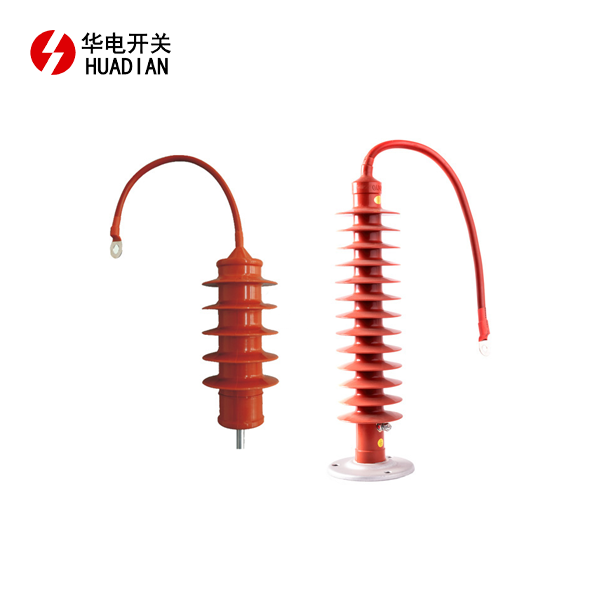
1. Basic definition
Zinc oxide arrester (MOA)
Function: Mainly used in power systems (such as substations and transmission lines) to limit lightning overvoltage and operating overvoltage, and protect high-voltage equipment (such as transformers and circuit breakers) from damage.
Core material: With zinc oxide (ZnO) resistor as the main component, it has excellent nonlinear volt-ampere characteristics (resistance drops sharply at high voltage).
Standard: Comply with power industry standards such as IEC 60099-4 and GB 11032.
Surge protector (SPD)
Function: Used in low-voltage distribution systems or electronic equipment to protect against lightning-induced overvoltage and operating overvoltage, and avoid damage to precision equipment (such as computers and communication equipment).
Core components: Use varistor (MOV), gas discharge tube (GDT) or TVS diode, etc.
Standard: Comply with low-voltage surge protection standards such as IEC 61643 and GB/T 18802.
2. Core differences
| Comparison items | Zinc oxide arrester (MOA) | Surge protection device (SPD) |
|---|---|---|
| Voltage level | High voltage (10kV and above) | Low voltage (1000V and below) |
| Application scenario | Power system (substation, transmission line) | Low voltage power distribution system (home, factory, data center) |
| Discharge capacity | Can discharge tens of kiloamperes (kA) of direct lightning current | Usually discharges thousands of amperes (kA) of induced lightning current |
| Response time | Microsecond level (μs) | Nanosecond level (ns) |
| Installation location | Substation, overhead line, near transformer | Distribution box, signal line, equipment front end |
| Protection object | High voltage equipment (such as transformer, insulator) | Low voltage electronic equipment (such as computers, communication equipment) |
| Structural features | No gap, pure zinc oxide resistor | May contain gaps (such as GDT), multi-level protection design |
3. Comparison of working principles
Zinc oxide arrester
It is in high resistance state (almost non-conductive) during normal operation.
When the system has overvoltage (such as lightning strike or operating overvoltage), the resistance of zinc oxide resistor drops sharply, discharges and flows into the ground, and clamps the voltage within a safe range.
After the overvoltage disappears, it automatically returns to high resistance state.
Surge protector
Uses multi-level protection (such as coarse protection + fine protection):
First level (such as GDT): discharges large surge current, but the residual voltage is high.
Second level (such as MOV): further reduces the residual voltage and protects sensitive equipment.
Third level (such as TVS diode): used for fine protection of high-frequency signal lines.
Faster response speed (nanosecond level), suitable for protecting electronic equipment.
4. Typical application scenarios
Zinc oxide lightning arrester
Busbars and high-voltage side of transformers in substations.
Next to insulators of overhead transmission lines.
Protection of power plants and high-voltage switchgear.
Surge protector
Distribution boxes in homes/offices (power SPD).
Antenna feeders of communication base stations (signal SPD).
PLC and sensor protection for industrial control systems.
summary
| Features | Zinc oxide arrester | Surge protector |
|---|---|---|
| Applicable voltage | High voltage (10kV+) | Low voltage (1000V-) |
| Main protection | Direct lightning strike, operating overvoltage | Inductive lightning, switching surge |
| Installation level | Primary side of power system | Secondary side of power distribution system |
| Typical industry | Electricity, energy, industrial high voltage | Construction, communication, IT, home electronics |
Key points:
MOA is used for high-voltage systems, SPD is used for low-voltage systems, and the two complement each other.
MOA has stronger discharge capacity, but higher residual pressure; SPD responds faster and is suitable for fine protection.
Complete lightning protection requires a combination of lightning arrester (lightning rod) + MOA + SPD + good grounding.
If you need more specific selection or installation suggestions,please contact us at :pannie@hdswitchgear.com.


