In the world of electrical distribution systems, circuit breakers play a crucial role in protecting equipment and ensuring safety. Two popular types of circuit breakers often compared are air circuit breakers (ACBs) and vacuum circuit breakers (VCBs). This comprehensive guide will explore the differences between these two technologies, their advantages and disadvantages, and help you determine which one might be better suited for your specific needs.

Understanding ACB and VCB Technologies
Air Circuit Breaker (ACB) Basics
Air Circuit Breakers, as the name suggests, use air as the primary medium for arc extinction. These devices are designed for low and medium voltage applications, typically up to 690V. ACBs operate by separating contacts in air, which helps to extinguish the arc created during circuit interruption.
Vacuum Circuit Breaker (VCB) Fundamentals
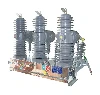
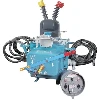
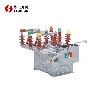
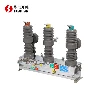
Vacuum circuit breakers utilize a vacuum as the interrupting medium. These breakers are engineered to operate in medium voltage ranges, usually between 1kV to 38kV. VCBs contain contacts sealed within a vacuum chamber, which provides excellent insulation and arc-quenching properties.
Key Differences in Operation
The primary distinction between ACBs and VCBs lies in their arc-extinguishing mechanisms. While ACBs rely on air to dissipate the arc, vacuum circuit breakers leverage the superior dielectric strength of a vacuum. This fundamental difference impacts various aspects of their performance, maintenance requirements, and suitability for different applications.
Comparing ACB and VCB Performance
Interrupting Capacity
Vacuum circuit breakers (VCBs) are renowned for their exceptional interrupting capacity, significantly outperforming Air circuit breakers (ACBs) in this regard. The unique vacuum environment within VCBs facilitates rapid arc extinction, allowing them to manage higher fault currents with greater efficiency. This rapid response is especially beneficial in critical applications where swift fault clearance is essential to prevent damage to equipment and maintain system stability. As a result, VCBs are often the preferred choice in industries requiring robust protection and reliability in high-stress electrical environments.
Operating Life and Maintenance
VCBs typically have a longer operating life and require less maintenance than ACBs. The sealed vacuum chamber in a VCB protects the contacts from environmental factors, reducing wear and tear. ACBs, on the other hand, may require more frequent maintenance due to their exposure to air and potential contamination. Vacuum circuit breakers are known for their extended operating life and minimal maintenance requirements, outperforming air circuit breakers in these aspects. The sealed vacuum chamber in a VCB shields the internal contacts from environmental factors such as moisture, dust, and pollutants, significantly reducing wear and tear over time. This protective environment ensures the VCB remains highly reliable with less frequent maintenance. In contrast, ACBs, which operate in an open-air environment, are more susceptible to contamination and require more regular upkeep to maintain optimal performance and prevent deterioration.
Environmental Considerations
VCBs are favored for their environmentally friendly operation, as they do not produce hot gases or harmful byproducts during arc extinction. This makes them a more sustainable choice, particularly in environments where minimizing ecological impact is a priority. In contrast, ACBs, although effective and widely used, can release gases and byproducts during operation, which might be a concern in sensitive or regulated settings. The cleaner operation of VCBs not only contributes to environmental protection but also aligns with increasing industry emphasis on sustainable practices.
Applications and Suitability
ACB Applications
Air circuit breakers are commonly used in low voltage distribution systems, typically in commercial and industrial settings. They are well-suited for applications where frequent switching operations are required, such as in motor control centers or main distribution boards in large buildings.
VCB Applications
Vacuum circuit breakers excel in medium voltage applications, making them ideal for power distribution networks, substations, and industrial facilities with higher voltage requirements. Their compact size and reliability make them particularly suitable for installations where space is at a premium.
Choosing Between ACB and VCB
The choice between an air circuit breaker and a vacuum circuit breaker depends on various factors, including the voltage level, required interrupting capacity, environmental conditions, and specific application needs. For low voltage applications with frequent switching, ACBs may be more cost-effective. However, for medium voltage systems requiring high reliability and minimal maintenance, VCBs often prove to be the superior choice.
Conclusion
In the debate of ACB vs VCB, there's no one-size-fits-all answer. Both technologies have their merits and are suited to different applications. Air Circuit Breakers continue to be valuable in low voltage systems, offering cost-effective solutions for many commercial and industrial applications. Vacuum circuit breakers, with their advanced technology and superior performance in medium voltage ranges, are increasingly becoming the preferred choice for modern power distribution systems.
When selecting between ACB and VCB, consider factors such as voltage requirements, switching frequency, environmental conditions, and long-term maintenance costs. For medium voltage applications demanding high reliability, minimal maintenance, and excellent arc-quenching capabilities, Vacuum Circuit Breakers often emerge as the better option.
Contact Us
Are you considering upgrading your electrical distribution system or in need of high-quality Vacuum Circuit Breakers? Shaanxi Huadian Electric Co., Ltd. offers state-of-the-art VCBs designed to meet the most demanding industrial and commercial applications. Our team of experts is ready to assist you in choosing the right circuit breaker solution for your needs. Contact us today at
pannie@hdswitchgear.com
austinyang@hdswitchgear.com
rexwang@hdswitchgear.com
to learn more about our products and how we can help optimize your power distribution system.
References
Johnson, R.K. (2019). "Comparative Analysis of Air and Vacuum Circuit Breakers in Modern Power Systems." IEEE Transactions on Power Delivery, 34(2), 789-796.
Smith, A.L. & Brown, T.E. (2020). "Advancements in Vacuum Circuit Breaker Technology for Medium Voltage Applications." Electric Power Systems Research, 185, 106368.
Zhang, Y., et al. (2018). "Environmental Impact Assessment of Air and Vacuum Circuit Breakers in Industrial Settings." Journal of Cleaner Production, 198, 1355-1366.
Patel, M.R. (2021). "Reliability and Maintenance Considerations for ACB and VCB Technologies." International Journal of Electrical Power & Energy Systems, 126, 106573.
Nakano, H. & Tanaka, S. (2017). "Cost-Benefit Analysis of ACB vs VCB Implementation in Low and Medium Voltage Distribution Networks." Energy Policy, 110, 438-447.
Gonzalez, C.A., et al. (2022). "Future Trends in Circuit Breaker Technologies: A Comprehensive Review." Renewable and Sustainable Energy Reviews, 156, 111963.