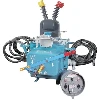
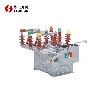
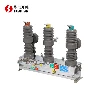
While switchgear manufacturing follows unified industry standards, different manufacturers employ varying production processes. Even those meeting all standards may have different focuses and technologies. Therefore, selecting high-quality switchgear requires careful consideration of two key dimensions: manufacturing process and core materials. However, since manufacturing processes are considered core internal technical information by each manufacturer and are rarely disclosed externally, they are difficult for the average person to assess directly. Consequently, material selection becomes a crucial factor in selecting switchgear.

From the perspective of the core components of switchgear, the outer shell, as the core protective component, is almost always made of metal, but the specific material selection varies, with common choices including aluminum alloy, stainless steel, and aluminum-zinc coated steel. Different materials differ significantly in key properties such as strength, hardness, and corrosion resistance. The core function of the switchgear shell is to effectively isolate the internal circuitry from the external environment (such as moisture, dust, and external impact), directly affecting the safety and stability of equipment operation. Therefore, the selection of the shell material is crucial.
Key Considerations for Material Selection
Electrical Performance Requirements
Insulation and Creepage Distance: Under high voltage, the cabinet structure must meet insulation requirements; metal cabinets require enhanced internal insulation.
Electromagnetic Shielding: Metal cabinets naturally possess electromagnetic shielding capabilities, providing superior protection for sensitive electronic equipment.
Grounding Continuity: The metal cabinet must ensure reliable grounding to prevent accidents caused by potential differences.
Environmental Adaptability
Corrosive Environments:
Coastal Areas, Chemical Plants: Stainless steel (316L) or aluminum alloy are preferred.
General Industrial Areas: Galvanized steel sheet (with powder-coated surface for enhanced protection) is sufficient.
Humidity and Temperature:
High Humidity Scenarios: Materials must have rust-proof coatings or be corrosion-resistant.
High-Temperature Environments (e.g., metallurgical industry): High-temperature resistant materials (such as stainless steel) must be selected, and heat dissipation design must be considered.
Mechanical Strength and Protection Rating
High-power cabinets are typically large and heavy, requiring materials with sufficient load-bearing capacity (e.g., busbar support structure).
Protection Rating (IP Rating): For outdoor or dusty environments, IP54 or higher is required. The design of the cabinet's sealing structure and material splicing process are closely related.
Safety and Regulations
Comply with national standards (e.g., GB/T 11022, IEC 62271), including requirements for fire resistance and arc resistance.
Metal cabinets must have proper grounding; non-metallic cabinets must pass flame retardant testing (e.g., UL94 V0).
Economy and Life Cycle Cost
Initial Cost: Galvanized steel < Aluminum alloy < Stainless steel < Special composite materials.
Long-term Maintenance: In corrosive environments, the maintenance cost of stainless steel/aluminum alloy is significantly lower than that of galvanized steel.
Other Important Design Considerations
Coating and Surface Treatment:
Galvanized steel sheets are recommended to be powder-coated (epoxy resin powder) to enhance corrosion resistance and wear resistance.
Stainless steel surfaces can be brushed or passivated to improve aesthetics and resist fingerprint corrosion.
Heat Dissipation Design:
High-power cabinets generate a lot of heat; material selection must be combined with the heat dissipation solution (e.g., air duct design, heat sinks).
Aluminum alloy has better heat dissipation performance than steel and is suitable for scenarios with high heat dissipation requirements.
Internal Isolation Components:
Busbar trays, supports, and other load-bearing components must be made of high-strength materials (e.g., galvanized steel).
Insulation components should use high-temperature resistant materials (e.g., ceramics, thermosetting plastics).
Summary
Comparing the performance of various enclosure materials, aluminized zinc plate stands out: it combines excellent high-temperature resistance and strong corrosion resistance with high mechanical strength and a high safety factor, effectively resisting environmental erosion under complex working conditions and ensuring the long-term stable operation of internal circuits. Especially against the backdrop of upgrading electricity demand, both residential and industrial power consumption are continuously rising, leading to increased current transmission in circuit wires. Industrial settings such as factories have even more stringent requirements for power transmission-switchgear needs to handle greater power transmission to maintain normal production line operation, simultaneously increasing the power carrying capacity requirements of supporting cables, necessitating the use of high-power cables to ensure stable power supply. Therefore, if selecting switchgear suitable for high-power scenarios while balancing high-temperature resistance and safety, aluminized zinc plate enclosures are undoubtedly the preferred choice, better adapting to complex industrial conditions, reducing the risk of equipment failure, and ensuring electrical safety.
Shaanxi Huadian Switchgear not only excels in material selection but also continuously achieves breakthroughs in technological research and development and international cooperation. Taking the medium-voltage switchgear as an example, in addition to using aluminum-zinc coated steel sheets to enhance cabinet performance, it is also equipped with vacuum circuit breakers, achieving comprehensive five-proof mechanical interlocking functions. The anti-reverse handle design effectively prevents misoperation, and higher levels of protection against internal combustion arcing and breaking capacity further ensure personal and equipment safety. For more information, please contact us:pannie@hdswitchgear.com.