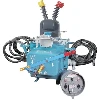
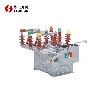
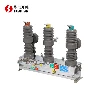
Compared to indoor circuit breakers, outdoor circuit breakers are directly exposed to the natural environment, resulting in significantly different fault causes and focuses, primarily increasing challenges in environmental adaptability and mechanical corrosion resistance.
Key Features and Major Differences
Before discussing faults, it's essential to understand the unique characteristics of outdoor circuit breakers:
Environmental Exposure: They are subjected to year-round exposure to sunlight, rain, wind, sand, snow, high temperatures, extreme cold, and salt spray (in coastal areas).
Operating Mechanism: Typically employing spring-loaded or hydraulic mechanisms to meet the demands of high-power outdoor operation.
Sealing System: Higher requirements are placed on the weather resistance and aging resistance of the seals.
Therefore, in addition to the common "gas" and "insulation" issues shared with indoor circuit breakers, faults in outdoor SF6 circuit breakers are more prominently manifested in "mechanical jamming," "external corrosion," and "seal aging."

I. Common Faults and Troubleshooting Methods
Fault 1: SF6 Gas Leakage (Exacerbated by Outdoor Environment)
This is the most critical fault, and outdoor environments accelerate its occurrence.
◆Symptoms:
The density relay issues a "low pressure" alarm or lockout signal.
Deterioration in insulation may lead to internal discharge.
◆Outdoor-Specific Causes:
Accelerated Aging of Seals: Ultraviolet rays from sunlight and drastic temperature changes (thermal expansion and contraction) accelerate the aging, hardening, and loss of elasticity of O-rings and gaskets.
Corrosion of Sealing Surfaces: Corrosive substances such as rainwater, salt spray, and industrial dust can corrode metal sealing surfaces such as flanges and bolts, leading to poor sealing.
Pressure Gauge/Valve Leakage: Large outdoor temperature differences may cause meter interfaces to loosen due to thermal expansion and contraction.
Enclosure Corrosion and Perforation: Severe corrosion of the circuit breaker support structure or enclosure may damage the gas chamber.
◆Handling Methods:
Report and monitor immediately: Treat as for indoor leaks.
Precisely locate the leak: Use a high-sensitivity leak detector, focusing on checking the sealing surfaces, welds, meter interfaces, and inflation valves.
Targeted treatment:
①When replacing seals, choose models with better weather resistance and anti-aging properties.
②Clean and polish corroded sealing surfaces; replace parts if severely corroded.
③Perform rust removal and anti-corrosion treatment on rusted housings.
④Replenish gas: Perform a trace moisture content test before and after replenishment, as humid air may have entered.
Fault 2: Mechanical Fault (Failure to Operate, Malfunction, Energy Storage Failure)
This is the most common type of fault in outdoor circuit breakers, mainly caused by mechanical problems.
Symptoms:
Failure to Open/Close: The circuit breaker does not operate after receiving a command.
Opening Immediately After Closing (Jumping): The mechanism cannot maintain the closed position.
Spring Not Stored or Insufficient Energy Storage: The energy storage motor runs continuously or does not run at all.
Outdoor-Specific Causes:
◆Water Ingress/Moisture in the Mechanism Box:
This leads to decreased insulation, short circuits, or corrosion in secondary circuits, opening and closing coils, auxiliary switches, and microswitches.
It causes mechanical components (such as bearings, connecting rods, and gears) to rust and seize.
◆Lubricating Grease Issues:
Low-Temperature Solidification: In extremely cold regions, ordinary grease solidifies, resulting in excessive operating force and mechanism jamming.
High-Temperature Loss: In high-temperature regions, grease thins and leaks, leading to poor lubrication and increased wear.
Dust Solidification: Wind and sand mix with grease, forming an abrasive paste that accelerates wear and causes jamming.
◆Component Aging: Severe outdoor temperature changes and vibrations make electrical components such as energy storage motors, limit switches, and heaters more susceptible to damage.
◆Foreign Object Intrusion: Small animals (such as birds and mice) enter the mechanism box, nesting or chewing through cables.
Handling Methods:
◆Moisture and Rain Protection Inspection:
In emergency situations, try drying the damp secondary circuit with a hairdryer.
Check the mechanism housing's sealing strips for integrity and ensure the drainage holes are clear.
◆Electrical Circuit Inspection:
Measure the operating voltage and check the fuses.
Check the opening and closing coils and energy storage motor for burnt-out.
Check the auxiliary switches and limit switch contacts for oxidation or poor contact.
◆Mechanical Component Inspection:
After power is off, manually perform energy storage and opening/closing operations to locate any jamming points.
Clean and lubricate rusted or jammed components. Use a special grease suitable for the local ambient temperature.
Check key load-bearing components such as springs, connecting rods, and latches for deformation or cracks.
◆Foreign Object Removal: Thoroughly clean bird nests, debris, etc., from inside the mechanism housing.
Fault 3: Insulation Fault (External and Internal Insulation)
Symptoms: Flashover to ground, phase-to-phase flashover, internal discharge.
Outdoor-Specific Causes:
External Insulation Pollution Flashover: This is the most typical insulation fault for outdoor equipment!
Contaminants (industrial dust, salt, dirt) accumulate on the surface of bushings and porcelain insulators. In humid weather (fog, dew, drizzle), a conductive film forms, causing surface flashover discharge.
Internal insulation degradation:
SF6 gas moisture content exceeds the standard (same cause as fault 1).
Moisture intrusion occurs internally, condensing into water droplets that adhere to the surface of the insulation components.
Remedial measures:
◆Treating external insulation flashover:
Regular cleaning: Establish a cleaning cycle based on the pollution level, and perform live or de-energized cleaning before the rainy or foggy season.
Apply anti-flashover coating: Apply a hydrophobic coating such as RTV (room temperature vulcanizing silicone rubber) to the porcelain bushing.
Replace with composite insulators: Use silicone rubber composite insulators, whose hydrophobicity and anti-flashover capabilities are far superior to porcelain insulators.
◆Treating internal insulation faults:
Same as indoor type, requires power outage for inspection and repair, repair of leaks, replacement of adsorbent, vacuum drying, and refilling.
Fault 4: Auxiliary Component Failure
Symptoms: Heater not working, temperature and humidity controller malfunctioning, pressure gauge indicating inaccurate readings, anti-condensation device malfunctioning.
Causes and Solutions:
Heater/Dehumidifier Failure: Causes condensation inside the mechanism housing, leading to secondary circuit failure. Regularly check its function and replace it promptly.
Pressure Gauge/Density Relay Malfunction: May cause false alarms. Regularly calibrate, or compare during power outage maintenance.
Secondary Cable Aging/Damage: UV radiation and temperature changes cause the cable sheath to become brittle and the internal copper wires to oxidize. Inspect and replace.
II. Routine Maintenance and Preventive Measures (Specifically for Outdoor Use)
Strengthen Special Inspections:
After rain or snow: Check the mechanism box and bushings for water ingress and cracks.
In foggy or humid weather: Focus on monitoring the external insulation for discharge and corona sounds.
During high-temperature seasons: Check if the pressure value is too high and if the mechanism box ventilation is adequate.
During extremely cold seasons: Check if the mechanism box heater is operating normally and prevent control components and pipelines from freezing.
After windy weather: Check for foreign objects and loose structural components.
Targeted Preventive Tests:
Circuit Resistance Test: Check if the conductive circuit connections are good, especially whether external terminals are oxidized due to wind and sun exposure.
Insulation Resistance Test: Includes insulation testing of the main circuit and secondary circuits.
Slight Moisture Content and Leakage Detection: The cycle should be shorter than for indoor equipment.
Mechanical Characteristic Test: Testing the opening/closing time, speed, and stroke is the most important means of judging the health status of the mechanism.
Seasonal Maintenance:
Before Winter: Inspect and put into operation heating and insulation devices; check if the lubricating grease is resistant to low temperatures.
Before Summer: Inspect ventilation and heat dissipation devices; clean the mechanism housing and replace with high-temperature resistant lubricating grease.
Before Rainy Season: Inspect lightning protection facilities (lightning arresters); clean contaminants from bushings.
Summary
When troubleshooting outdoor SF6 circuit breakers, it is crucial to focus on the core factor of "environment." Maintenance priorities include:
◆Moisture prevention: Ensure the sealing of the mechanism box and the proper functioning of the heating and dehumidification system.
◆Rust prevention: Regularly perform anti-corrosion treatment on the metal structure.
◆Dust and dirt prevention: Regularly clean the external insulation and the interior of the mechanism.
◆Aging prevention: Use weather-resistant materials and strengthen the inspection and replacement of seals, lubricants, and secondary components.
Establishing a condition-based maintenance strategy, utilizing online monitoring (such as micro-moisture and density monitoring) and live-line testing to promptly identify potential problems and prevent the fault from escalating, is key to ensuring the safe and stable operation of outdoor SF6 circuit breakers.
Shaanxi Huadian, deeply rooted in the fertile soil of China's equipment manufacturing industry, upholds decades of craftsmanship to bring you the SF6 circuit breaker series, combining cutting-edge technology with ultimate reliability. We are not only equipment manufacturers, but also steadfast guardians of your power safety. For inquiries, please contact us.
Email:pannie@hdswitchgear.com.
Whatsapp/Wechat:+8618789455087