Both vacuum circuit breakers and vacuum contactors use vacuum as the arc extinguishing medium and share common characteristics such as long lifespan and safety and reliability. However, they differ fundamentally in their design principles, functions, and application scenarios.
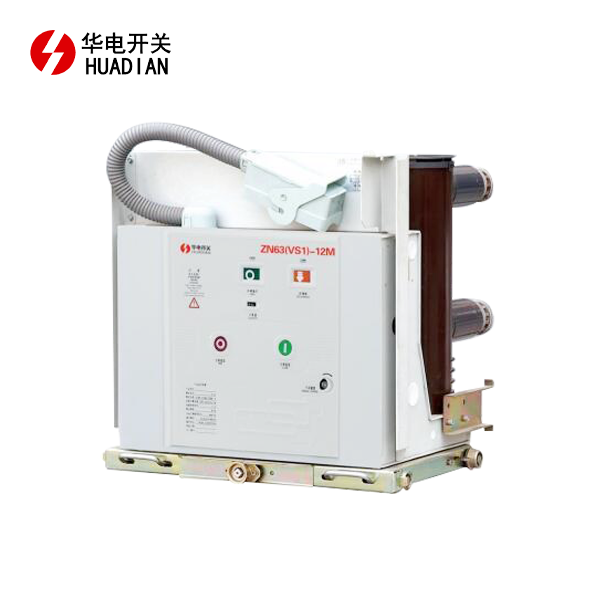 |
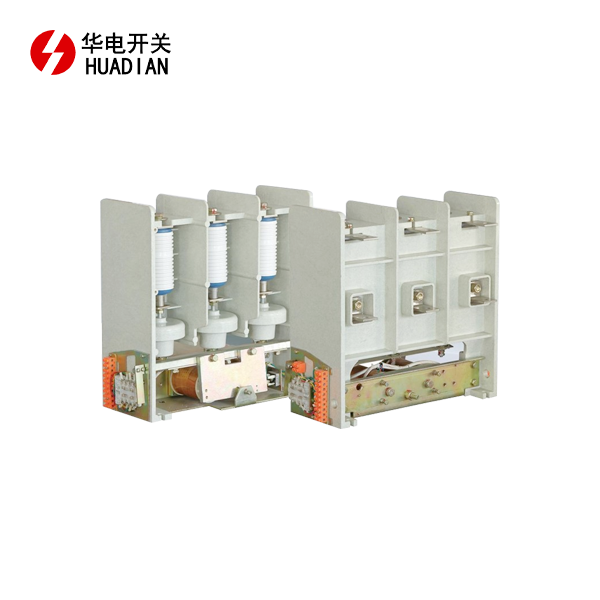 |
I. Introduction to Vacuum Circuit Breakers:
Vacuum circuit breakers and vacuum contactors essentially perform the same function as air circuit breakers and air contactors, except that the arc extinguishing unit is placed in a vacuum environment, enhancing adaptability to the environment. Furthermore, due to the excellent vacuum insulation and arc extinguishing performance, they are widely used.
Vacuum circuit breaker: It is a protective device that automatically trips when a fault occurs in the circuit, protecting the circuit; it can also manually trip to disconnect the load current.
Contactors are used for frequent switching of small currents and, while they do offer some protection (they usually have thermal overload protection), they do not have energy storage mechanisms and rely on the magnetic attraction of the coil. They cannot interrupt fault currents. As for circuit breakers, there's no need to elaborate further. In cases of relatively low capacity, contactors are more commonly used in engineering applications.
The operating principles are also different.
One is for switching normal operating current, and the other is for interrupting fault current.
The circuit breaker body and all its accessories combined can achieve three-stage protection and time delay.
II. Introduction to Vacuum Contactors:
1. The conductive circuit of a vacuum contactor consists of incoming and outgoing conductive rods and a vacuum circuit breaker, primarily used for switching, and possesses strong resistance to contamination.
2. Vacuum contactors are suitable for AC 50Hz power systems with rated voltage up to 1140V and rated current up to 630A. They are used for directly or remotely connecting and disconnecting the load current in the main circuit, and are suitable for use in explosion-proof magnetic starters composed of various protection devices, controlling frequently operated three-phase induction motors and other devices. The circuit breaker consists of an operating mechanism, conductive circuit, sealing components, and housing. The external insulation is mainly achieved through high-voltage bushings, and the internal insulation is composite insulation. The conductive circuit is connected to the vacuum interrupter chamber via conductive clips and moving and stationary end conductive plates. The overall structure is a three-pole common-box type.
3. Vacuum contactors are suitable for protection and control in substations and industrial and mining enterprise distribution systems;
4. The difference between a vacuum contactor and a circuit breaker is that a contactor is a control device, while a circuit breaker is a protective device. A contactor can frequently operate and has the function of carrying current, but it does not have overload protection or short-circuit protection functions. A circuit breaker has switching, overload protection, and short-circuit protection functions, but its allowable operating frequency is lower.
5. A vacuum contactor is a device for repeated operation. It can interrupt the load current but cannot interrupt short-circuit current. It also has normally open and normally closed contacts. It does not have short-circuit current protection and can only complete opening and closing based on a given signal.
Detailed comparison
| Features | Vacuum Circuit Breaker | Vacuum Contactor |
|---|---|---|
| Core Functions | Protection (isolating and interrupting faults) | Control (frequent switching on and off) |
| Arc Extinguishing Capability | Extremely powerful, capable of interrupting short-circuit currents (tens of kA) | Breaking capacity: Relatively weak, usually only capable of interrupting rated current and small overload currents |
| Operating Life | Mechanical life: relatively short (tens of thousands of operations) Electrical life: short (a few to tens of short-circuit interruptions) | Mechanical life: Extremely long (millions of cycles) Electrical life: Long (hundreds of thousands of operations at rated current) |
| Operating Method | Usually operated by spring or electromagnetic mechanisms, with fast operating speed | Usually operated by AC/DC electromagnets, with slower operating speed |
| State Retention | Equipped with a mechanical locking device; no electrical energy is required to maintain the closed position after closing | No self-holding capability; the closed state requires continuous power supply to the coil to maintain |
| Appearance and Structure | Relatively large in size and complex in structure | Relatively small size and compact structure |
| Typical Applications | Used as a main power switch or branch circuit protection switch in substations, distribution rooms, etc., generally not frequently operated | Used for frequent starting and stopping of motor control, electric furnace transformers, capacitor bank switching, etc. |
In-depth Analysis
1. Vacuum Circuit Breaker
Design Purpose: Safe Isolation and Protection
Its main task is to protect the entire circuit and equipment downstream. When serious faults such as overload or short circuit occur in the line, the relay protection device sends a signal, and the circuit breaker can quickly (usually within tens to one hundred milliseconds) trip, interrupting the huge fault current and preventing the accident from escalating.
Key Features:
Robust Contacts and Mechanism: To withstand and interrupt the electromagnetic forces and heat generated by huge short-circuit currents, its vacuum arc extinguishing chamber, contact materials, and operating mechanism are very robust.
Interlocking with Protection System: It usually does not have the ability to detect faults itself, and needs to cooperate with external relay protection devices (microcomputer-based integrated protection) or fuses, which detect the fault and issue a tripping command.
Mechanical Latching: Once closed, its mechanism locks it in the closed position, and it will not automatically open even if the control power is lost, ensuring the continuity of power supply.
Application Scenarios:
Incoming and outgoing lines of power plants and substations.
Main distribution cabinets of industrial and mining enterprises and high-rise buildings.
Backup protection for large motors (usually used in series with vacuum contactors).
2. Vacuum Contactor
Design Purpose: Frequent Operation and Control
Its main task is to frequently connect and disconnect circuits under normal operating conditions. For example, a machine tool motor may need to start and stop thousands of times a day.
Key Features:
Extremely High Operating Frequency: Its mechanical structure and electromagnetic system are optimized for frequent operation, with a mechanical life of millions of cycles.
Electromagnetic Operation and Holding: It operates by generating magnetic force through energizing the coil, and disconnects under the action of a spring when the power is cut off. The closed state requires continuous power supply; once the control signal disappears (e.g., the emergency stop button is pressed), it will immediately disconnect.
Limited Short-Circuit Breaking Capacity: It cannot interrupt short-circuit currents on its own. In practical applications, it must be used in series with a fuse. When a short circuit occurs, the fuse quickly blows to interrupt the fault, and the contactor is only responsible for normal frequent switching.
Application Scenarios:
Frequently started electric motors, such as those in machine tools, cranes, compressors, fans, and water pumps.
Control of electric furnace transformers and capacitor compensation devices.
Resistive loads requiring remote automatic control.
About us
Shaanxi Huadian specializes in vacuum electrical equipment, meticulously crafting each vacuum circuit breaker and vacuum contactor to provide a solid foundation for your power safety and efficient operation. Please contact us if you are interested.
Email:pannie@hdswitchgear.com.
Whatsapp/Wechat:+8618789455087